



TL;DR: CPG brands are competing for share of mind, not shelf space. Winning requires mapping a buyer journey that jumps between social feeds, retailer sites, and physical shelves in the same hour; building audiences around shopper behavior and retailer affinity instead of broad demographics; and running full-funnel media that connects discovery to cart to repeat purchase, with attribution that captures both online and offline sales.
Today’s CPG brands are no longer fighting for shelf space. They’re fighting for share of mind, scroll, and cart. Whether you’re a legacy brand or a rising DTC challenger, the playbook has changed. Consumers are mixing in-store with online, discovering products through influencers or TikTok trends, and shifting loyalty faster than ever. The path to purchase is messy, fast, and full of competition. Standing out in this environment isn’t just about a great product or clever packaging. You need an omnichannel strategy that connects awareness to action — online, in-store, and everywhere in between. At KORTX, we help CPG brands connect with the right consumers, in the right moments, with the right message to drive discovery, conversion, and repeat purchase. Let’s break down how.
What Makes CPG Advertising Different
- The path to purchase is messy and fast. A consumer might discover a product on TikTok, price-check it on Amazon, and buy it at Kroger, all within a single scrolling session.
- Frequency is high, but loyalty is low. Categories like snacks, beverages, and personal care see frequent repurchase, but brand switching is common and easy.
- Value and brand matter differently by category. Some categories are price-driven; others, like premium beauty or wellness, are driven by brand story and identity.
- Platform behavior shapes discovery. TikTok food trends, Instagram beauty tutorials, and Amazon reviews influence purchase decisions as much as traditional advertising does.
- Purchases happen everywhere. Online, in-store, or both — depending on the product, the retailer, and the moment.
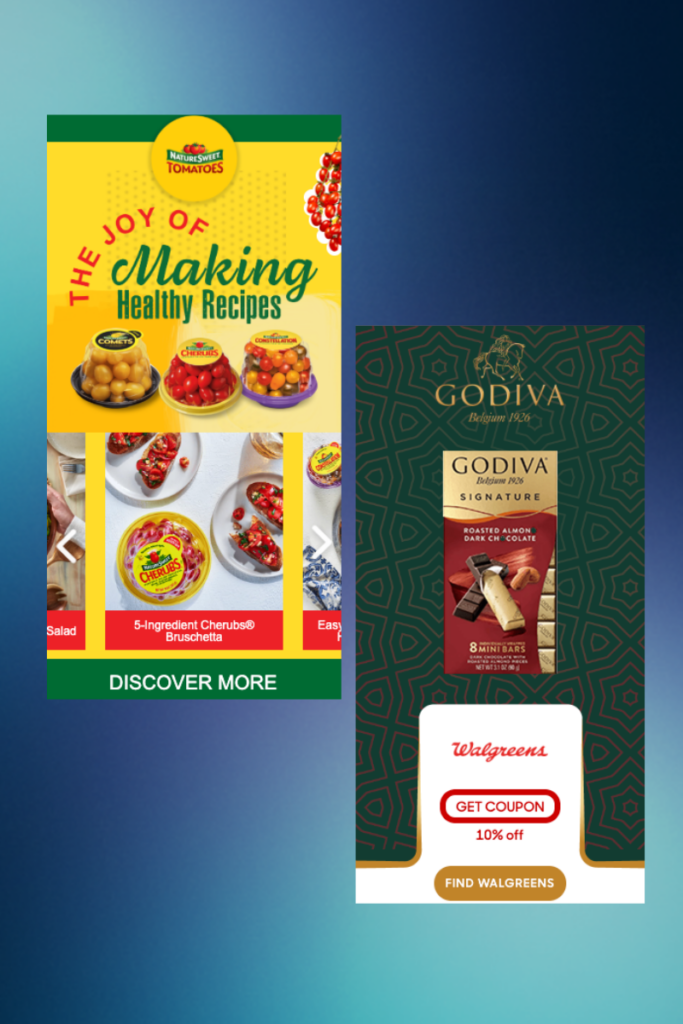
Understanding the CPG Buyer Journey
The buyer journey for consumer packaged goods may be short, but it’s rarely linear. Consumers are influenced by social trends, lifestyle shifts, price sensitivity, and convenience. To win, brands need to show up across every stage with intention.
Stage 1: Awareness (“I’ve never heard of this brand.”)
Typical signals include:
- Browsing recipes, wellness tips, or beauty tutorials
- Engaging with creators or influencers
- Searching product categories generically (e.g., “low-sugar snacks” or “eco-friendly detergent”)
Advertising strategy: Social-first content, influencer whitelisting, paid native and video, and contextual display placements introduce the brand before the need is even fully formed. Goal: Seed brand recognition and emotional relevance early.
Stage 2: Consideration (“I’ve seen it — should I try it?”)
Typical signals include:
- Looking up reviews, ingredients, or price
- Visiting the brand website or retail locator
- Comparing with known competitors
Advertising strategy: Retargeting with rich media, testimonials, and UGC — paired with value-focused messaging — builds the proof points needed to move from curiosity to intent. Goal: Turn awareness into genuine purchase intent.
Stage 3: Conversion (“Where can I buy it now?”)
Typical signals include:
- Searching “[Brand] near me” or “Buy [Brand] online”
- Clicking through to retailers or DTC product pages
- Responding to promo codes or limited-time offers
Advertising strategy: Shoppable ads, dynamic creative with retailer availability, geo-fenced offers, and retailer co-op placements remove friction at the exact moment of decision. Goal: Make the purchase path as short and frictionless as possible.
Stage 4: Loyalty (“Should I keep buying this?”)
Typical signals include:
- Following the brand on social
- Signing up for email or SMS
- Engaging with reorder, subscription, or review requests
Advertising strategy: Lifecycle email marketing, SMS reorder prompts, loyalty rewards, and product drop campaigns keep the brand top of mind after the first purchase. Goal: Turn a single purchase into a habit — and an advocate. 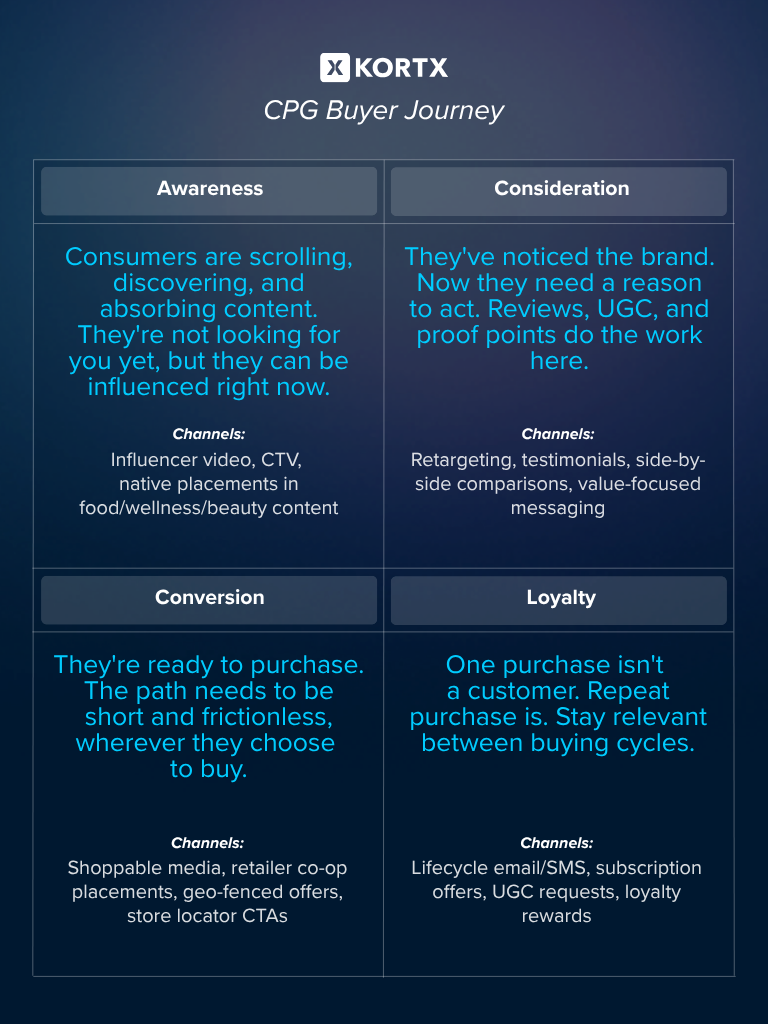
How to Build a CPG Audience Strategy
The CPG market is huge — billions of buyers, millions of products, thousands of competitors — but that doesn’t mean your media strategy should go broad. Total Addressable Market (TAM) in CPG is universal, but your addressable audience isn’t. Success comes from narrowing in on the right consumers based on category behavior, lifestyle signals, retailer affinity, and purchase intent.
- Retailer-specific segments: Reach shoppers at Kroger, Whole Foods, Walmart, Target, Amazon Fresh, or local co-ops.
- Shopper behavior overlays: Identify snackers, label-readers, sustainability-focused buyers, or convenience-driven shoppers.
- Lifestyle segmentation: Foodies, clean beauty buyers, young parents, and fitness-driven consumers.
- Platform-specific signals: Tailor creative and placement to where consumers engage — Instagram for beauty, Pinterest for meal planning, CTV for grocery heads-of-household.
- Purchase cycle modeling: Understand when replenishment, trial, or seasonal relevance spikes.
- Custom lookalikes: Build from your best buyers, whether they came from online or in-store purchase data.
This allows us to create scalable yet strategic segments that go beyond demographics, delivering relevance in the moment it matters most.
CPG Advertising Funnel Strategy
Winning in CPG means guiding the customer from brand spark to repeat buy — with content and tactics tuned to every step.
Top-of-Funnel: Spark Discovery and Emotional Relevance
- Influencer-led video content on TikTok, Instagram Reels, or YouTube Shorts
- CTV or programmatic video with lifestyle positioning
- Native placements in relevant contexts (food blogs, parenting sites, wellness hubs)
- Sampling or sweepstakes to drive early engagement
Goal: Seed the brand and emotional appeal before the need even arises.
Mid-Funnel: Reinforce Benefits and Build Consideration
- Retargeting with reviews, recipes, or user testimonials
- Side-by-side comparisons or “Why [Brand]?” explainer videos
- Dynamic display featuring flavor variety, product size, or use cases
- Email/SMS capture through value-driven landing pages
Goal: Move from awareness to intent with proof and positioning.
Lower-Funnel: Make It Easy to Buy Now
- Shoppable media integrations with retailer partners (Instacart, Amazon, Walmart Connect)
- DTC campaigns tied to first-purchase incentives or bundles
- Store locator CTAs with geo-intelligent delivery
- Dynamic creative with in-stock messaging or promotions by region
Goal: Reduce friction, create urgency, and convert.
Post-Purchase: Turn Buyers Into Repeat Customers
- Lifecycle email and SMS sequences triggered by purchase or reorder timing
- Subscription and auto-replenishment offers
- Review and UGC requests that build social proof
- Loyalty rewards and exclusive product drops for repeat buyers
Goal: Extend value beyond the first purchase and build long-term loyalty.
CPG Creative Strategy: Quick, Clear, Craveable
Great CPG creative grabs attention fast and communicates value even faster. Whether it’s indulgent, functional, or eco-conscious, your hook needs to be immediate and visually impactful.
- Lead with the benefit: “More protein, less sugar” or “100% natural clean.”
- Show the product in action: Think bite, pour, lather, clean — not just static packaging.
- Make it snackable: Short, vertical, and mobile-optimized.
- Highlight trust signals: Awards, third-party certifications, customer reviews.
Formats that perform:
- Short-form video: 6–15 second product demos, influencer reactions, or before/afters
- UGC carousels: Real customer quotes, recipes, or routines
- Interactive rich media: Flavor selectors, product pairings, or sample sign-ups
- Dynamic creative: Creative that updates by region, offer, or retailer availability
The CPG Marketing Calendar
- Q1 — Wellness reset, dry January, new routines: Position better-for-you products and intro bundles.
- Q2 — Spring refresh, Easter, Mother’s Day: Seasonal flavors, gifting, and home entertaining.
- Q3 — Back-to-school, summer travel: Convenience, snackability, and portability.
- Q4 — Holiday peak, gifting, indulgence: Premium positioning, multi-packs, and cross-promos.
Align media with shopper activation calendars, not just media flight schedules — retail promo windows and seasonal triggers often move faster than a standard campaign calendar. 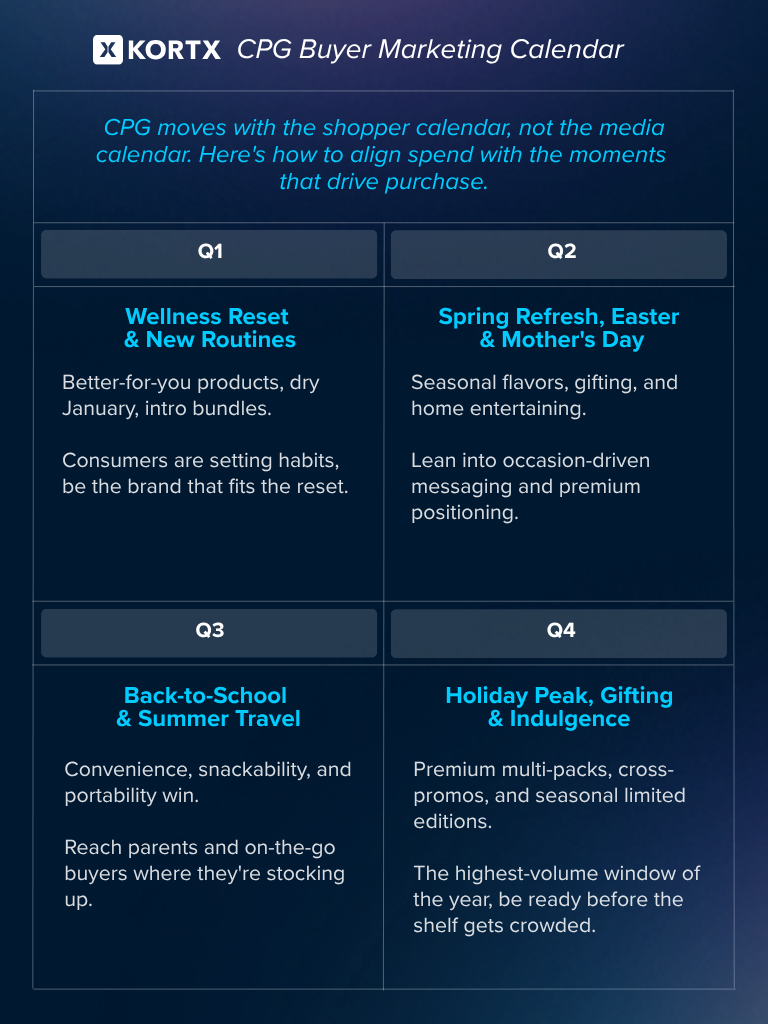
How to Measure CPG Advertising Performance
Measuring success in CPG isn’t just about impressions or clicks. It’s about incremental sales, brand lift, and purchase intent — whether the purchase happens online or offline. The metrics we track include:
- Add-to-cart and purchase behavior (via shoppable integrations)
- Retailer conversion lift (Walmart, Target, Amazon)
- Foot traffic to stores (for retail-heavy CPG brands)
- Brand search lift post-campaign
- First-party CRM matchbacks for DTC brands
- ROAS across paid media platforms
Need custom modeling? We work with third-party attribution partners, MMM tools, and clean room integrations to show how media moves units.
How KORTX Helps CPG Brands and Agencies
- Define and scale high-value audiences using retailer, lifestyle, and purchase-intent data instead of broad demographics.
- Align media with real-world retail and DTC dynamics, connecting online discovery to offline and online purchase.
- Launch full-funnel programs built to drive discovery, conversion, and repeat purchase, not just clicks.
- Tie performance to real outcomes, from cart to re-order, with attribution built for CPG’s messy path to purchase.
Final Takeaway: In CPG, Relevance Beats Reach
It’s more important to out-strategize your competitors than it is to outspend them.
That means showing up with the right story, for the right consumer, at the exact right time, whether they’re scrolling TikTok, shopping Instacart, or standing in front of the shelf.
Ready to make your next campaign your best-performing one? [Let’s talk CPG strategy →]
Frequently Asked Questions
What makes CPG marketing different from other verticals?
CPG brands sell high-frequency, low-consideration products across an enormous addressable market, but purchases happen both online and offline, often within minutes of discovery. That combination of speed, scale, and channel fragmentation is what sets CPG apart.
How do you target a CPG audience that’s basically “everyone”?
By narrowing on behavior instead of demographics — retailer affinity, shopper habits (label-readers, snackers, sustainability-focused buyers), platform engagement, and purchase-cycle timing. TAM is broad, but the addressable audience for any given campaign should be specific.
What’s the biggest mistake CPG brands make in digital advertising?
Treating the funnel as a single moment instead of a journey. Brands that only invest in performance media at the bottom of the funnel miss the discovery and consideration stages that build the demand performance media is trying to convert.
How important is retail media in a CPG strategy?
Very. Platforms like Instacart, Amazon, and Walmart Connect sit at the exact moment of purchase decision, and retailer co-op dollars can extend budget significantly when paired with upper-funnel awareness work.
How do you measure CPG advertising performance when most sales happen offline?
Through a mix of retailer conversion lift, foot traffic measurement, brand search lift, CRM matchbacks for DTC brands, and, where available, MMM or clean room integrations that connect media exposure to sales data across channels.
How often should CPG brands refresh their creative?
More often than most verticals. Fast-moving platform trends and short attention spans mean creative can fatigue in weeks, not months — dynamic creative by region, offer, or retailer helps extend relevance without a full reshoot every cycle.